Burt Robeson
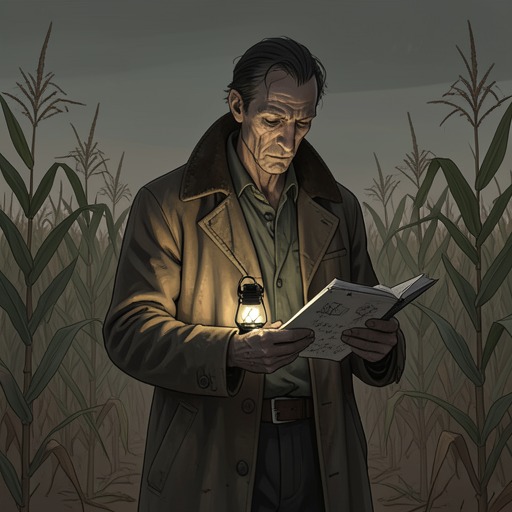
Children of the CornBurt Robeson is a weary husband and the driver of the T-Bird whose journey with Vicky into Gatlin becomes a chain of escalating danger. His defining turns are marked by loss of control: first the strain of trying to save a failing marriage, then the terrible impact of a child beneath the car, and finally a flight into the corn as the town’s armed children converge.
Identity and Introduction
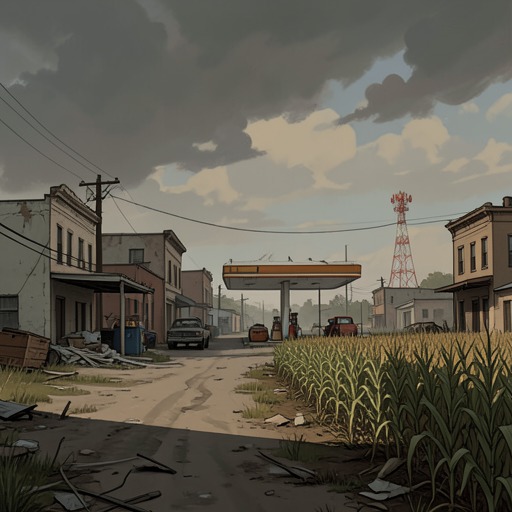
Burt is driving after a long stretch of travel from Boston. He has driven fifteen hundred miles on turnpikes himself because Vicky would not drive for long, a disagreement that feeds the resentment between them. Their decision to leave the turnpike and cross miles of corn country has become another point of friction rather than a shared adventure.
In the car, Burt grips the steering wheel until his knuckles turn white. His angry thought that one hand might fly off and hit Vicky shows how close irritation has come to violence, but he checks himself by framing the trip as an effort to save their marriage. The comparison he makes to soldiers supposedly saving villages in war gives that effort a bitter, self-mocking edge: reconciliation feels less like tenderness than a grim campaign.
Marriage Under Strain
Burt’s argument with Vicky is specific and accumulated. He reminds her how much driving he has done and begins to say that they could turn around, go home, and see the lawyer she had wanted to consult. Vicky disputes his characterization of her refusal to drive, explaining that long drives bring on migraines. Neither the route nor the trip’s purpose has repaired their conflict; even the prospect of turning back is presented as a return to an unresolved marital crisis.
The argument also becomes a practical danger. Burt takes his eyes off the road to look at Vicky as he tells her he has had enough. She turns forward, then suddenly sees what he has not: something in the road. Her warning forces his attention back to driving, but only at the last moment.
The Collision
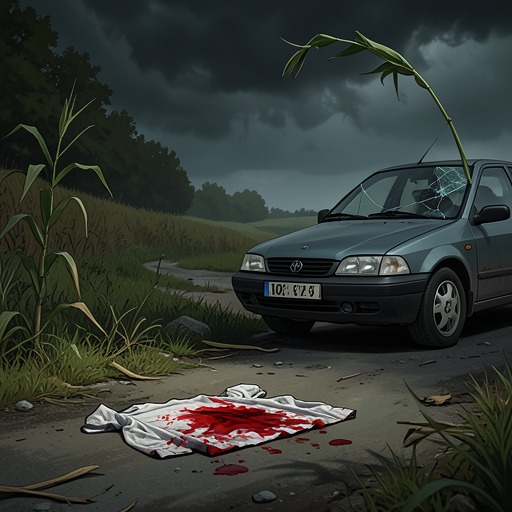
Burt sees something disappear beneath the T-Bird’s bumper. As he begins switching from the gas to the brake, the impact thumps beneath the front wheels and then the rear. The car brakes along the centerline, leaving black skid marks as it decelerates from fifty miles per hour to a stop.
Burt initially asks Vicky to tell him it was a dog. Her pallid expression and answer that it was a little boy make the collision irrevocable. The blunt shift from a hoped-for animal to a child exposes the human cost of the accident, while the car’s abrupt stop interrupts the quarrel without resolving the danger created by it.
The Children Converge
Later, inside the church, Burt hears the T-Bird’s horn sound as one continuous blast. He jumps from the pulpit and runs down the center aisle, throwing open the vestibule door into the hot sunshine. Vicky is upright behind the steering wheel, both hands on the horn ring, swiveling her head as children come toward her from all around.
They carry knives, hatchets, pipes, rocks, and hammers; one girl, perhaps eight years old, holds a jackhandle. Burt notices that none has a gun, but the absence of firearms does not make the gathering harmless. Some children laugh, while others glance at him, nudge one another, point, and smile. Frozen on the church steps, Burt tries to make sense of the scene by wondering who among them are the parents and who the children. The sight presents the town’s children not as scattered passersby but as an armed group converging on Vicky and the car.
Flight into the Corn
Burt runs past the sign announcing that he is leaving Gatlin, crosses the road, and kicks off his loafers before entering the corn. The rows close over him, hiding him; instead of slowing, he feels unexpected relief and finds a second wind. The field that had defined the monotonous drive now offers immediate concealment.
He first runs down a row, turns parallel to the road, then doubles back and crosses rows before moving deeper into the crop. This deliberate, irregular route is an attempt to keep the children from seeing his dark head among the tassels. Once he collapses to his knees, he can hear only his own labored breathing, and his repeated gratitude that he had quit smoking registers the bodily limit of his escape. His flight preserves a moment of concealment, not a confirmed escape from the threat.